
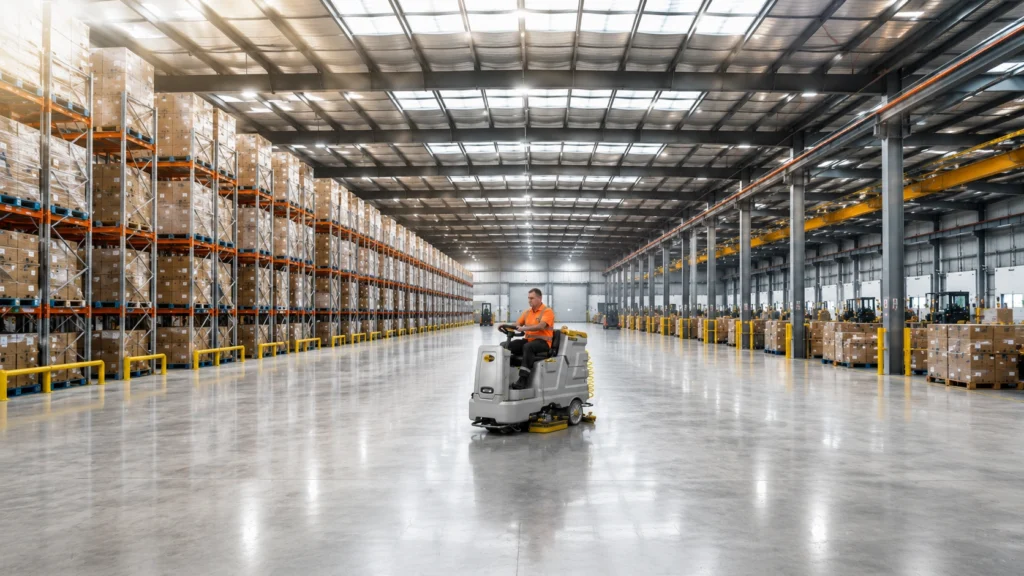
1.Evaluate Your Warehouse’s Floor Size & Layout First
The very first step when picking a warehouse floor scrubber is measuring your usable cleaning space, as workspace dimension directly determines machine type and working efficiency. Small warehouses under 2,000 sq. ft with narrow storage aisles typically benefit from compact walk-behind floor scrubbers. These slim-profile models navigate tight rack gaps, small loading zones and irregular corner spaces without hindrance.
For mid-to-large warehouses over 5,000 sq. ft with open bulk storage areas and long continuous walkways, ride-on floor scrubbers become the cost-effective option. Their wider scrubbing paths and larger solution tanks drastically cut down cleaning time, reducing repeated passes across expansive flooring. Also note fixed obstacles like pallet racks, support pillars and dock bumpers; irregular layouts need flexible, turning-friendly scrubber designs to avoid missed cleaning spots.
2.Match Scrubber Type to Your Daily Cleaning Workload
Warehouse cleaning frequency varies heavily based on industry, which splits scrubber choices into three core categories aligning with our site’s Machine Comparison blog category:
- Light daily cleaning (food warehouse, small retail storage): Battery-powered compact walk-behind scrubbers with small waste tanks suit 1–2 shift daily cleaning of light dust and minor spills. Low noise output lets operators work during regular business hours without disrupting staff.
- Heavy-duty continuous cleaning (logistics, manufacturing warehouse): Industrial-grade ride-on floor scrubbers with big-capacity clean/waste water tanks and high-pressure scrub brushes handle accumulated grease, pallet scuff marks, chemical spills and heavy industrial debris. Most models support 6+ hours nonstop operation for multi-shift warehouses.
- Round-the-clock large distribution centers: Automated robotic floor scrubbers cut labor expenses for facilities running 24/7, ideal for standardized open-floor warehouses with fixed navigation routes.
3.Check Your Warehouse Floor Material & Stain Types
Different warehouse floor surfaces require matched brush pressure and scrubbing configurations, a key detail covered in our Cleaning Guides content series:
- Epoxy and polished concrete floors: Soft nylon rotary brushes prevent surface scratching while lifting daily dust.
- Rough unsealed concrete: Hard abrasive disk brushes dig into embedded dirt, tire marks and industrial oil stains common in freight warehouses.
- Anti-slip textured warehouse flooring: Scrubbers with adjustable water flow avoid leftover standing water that creates slip hazards for forklift traffic.
Prioritize scrubbers with customizable brush pressure settings if your warehouse mixes multiple floor materials across storage, loading dock and office sections.
4.Key Functional Specs to Compare Before Purchase
Referencing our professional Buying Guide articles, four non-negotiable specs filter low-quality scrubber options:
- Battery runtime: Lead-acid or lithium battery options; lithium batteries deliver longer cycle life and quick charging for busy multi-shift warehouses.
- Solution & recovery tank volume: Larger tanks minimize frequent refilling/water dumping downtime across large spaces.
- Squeegee design: Premium curved rubber squeegees remove 95%+ wastewater to eliminate slip risks for forklift and pedestrian traffic.
- After-sales maintenance convenience: Select brands with easily replaceable spare parts to align with our Maintenance Tips guides, lowering long-term repair downtime and costs.
Consider Long-Term Operational Cost & After-Sales Service
Many warehouse managers only focus on upfront purchase cost and overlook recurring operating expenses. Calculate ongoing costs including battery replacement, brush consumables, cleaning detergent consumption and regular maintenance fees before finalizing orders. Reliable manufacturers featured in our Company News and Industry Solutions offer on-site maintenance support, spare parts stock and professional operator training for bulk warehouse purchases.
Final Takeaway
Selecting a warehouse floor scrubber balances space size, floor condition, daily workload and long-term maintenance budget. By analyzing your actual on-site needs instead of blindly picking high-powered oversized machines, warehouse operators maximize cleaning efficiency while cutting unnecessary operational waste. For customized solution recommendations tailored to your specific warehouse industry, browse our full range of industry-focused floor scrubber buying guides.